2026-10-22 ·
Managing Condensation After Spray Foam Removal in Lincolnshire
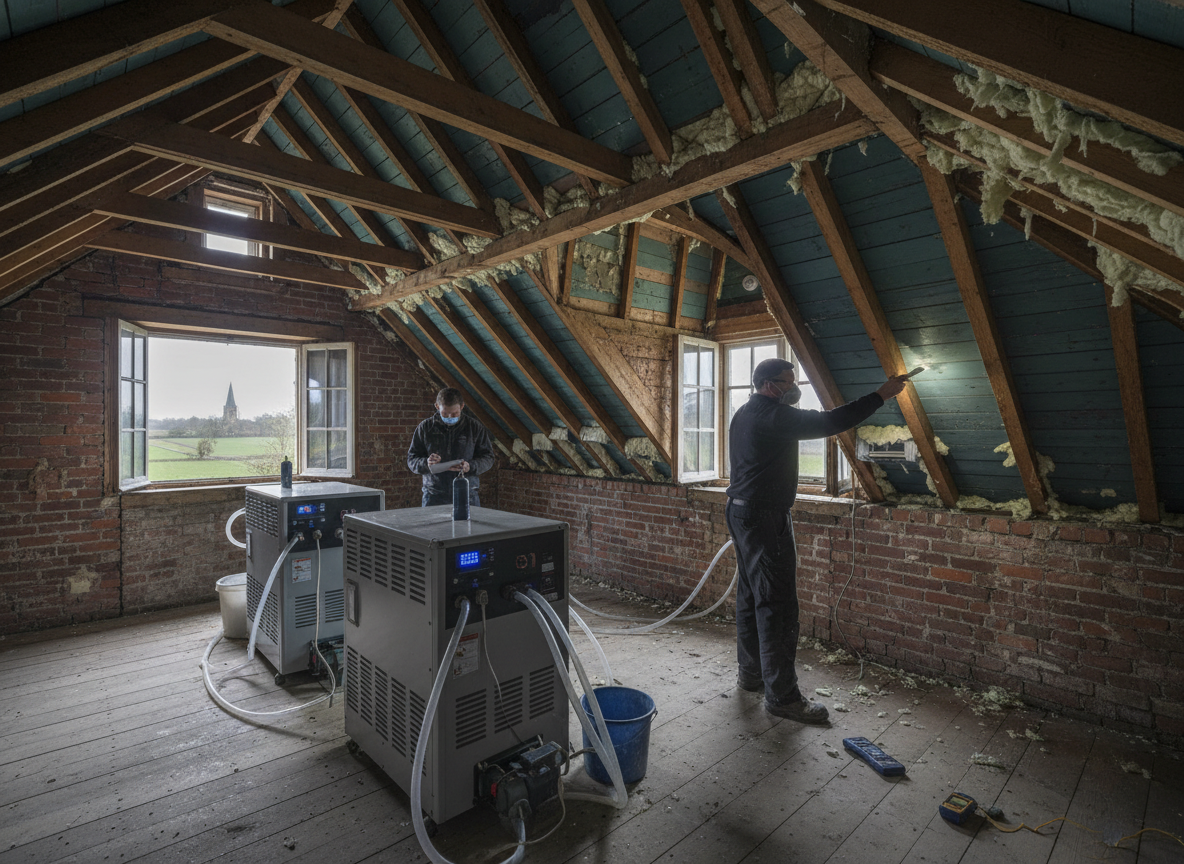
After spray foam removal in Lincolnshire, condensation is best managed by restoring balanced airflow and monitoring moisture levels within the first 30 days. Older properties in Boston often feature solid walls and limited original vents that previously relied on the foam for temperature stability, so removal exposes these gaps to the county's frequent damp air and winter temperature swings.
Why Condensation Appears After Removal in Boston Homes
Boston's Victorian and Edwardian terraces along streets near Strait Bargate commonly retain spray foam installed decades ago to combat fenland damp. Once removed, the sudden change in thermal mass allows warm indoor air to meet cooler external walls, especially during the 40-50 wet days typical each autumn. This creates visible moisture on rafters and plaster that was not an issue while the foam remained in place. Local soil conditions with a high water table further raise baseline humidity inside these buildings compared to newer estates in nearby Kirton or Donington.
Monitoring Moisture Levels in the First Month
Homeowners should check relative humidity daily with a simple meter placed in the loft or affected rooms. Readings above 60 percent signal the need for extra ventilation before mould spots form on timbers. In Boston properties, condensation often concentrates along north-facing roof slopes where wind-driven rain adds extra load. Recording these readings for two weeks provides a clear baseline before any new insulation or extractors are considered.
Improving Airflow Without Reintroducing Insulation Issues
Adding ridge vents or low-level air bricks restores circulation while avoiding the closed-cell foam that caused mortgage problems in the first place. Properties near the River Witham benefit from slightly higher natural airflow than those inland toward Sleaford, yet still require mechanical assistance during still winter periods. A single 100 mm extractor fan running on a humidistat can move enough air to keep surfaces dry without over-ventilating and raising heating costs.
Linking Removal Work to Long-Term Condensation Control
ClearSeal Solutions recommends pairing removal with an insulation assessment so any new measures match the building's actual construction rather than repeating past mistakes. Older Boston stock often needs targeted work rather than whole-loft solutions, and readers can review the details in the article Why Older Boston Properties Often Require Spray Foam Extraction. Cost planning is also useful at this stage; see What Spray Foam Removal Typically Costs in Lincolnshire for realistic ranges based on property size.
Seasonal Adjustments for Lincolnshire Weather
Winter months bring the greatest risk because indoor heating pushes moist air upward into cold roof spaces. In Boston, where temperatures can drop below freezing for several nights in January, temporary dehumidifiers placed on timer help bridge the gap until permanent vents are installed. Summer brings different challenges with high external humidity, so extraction should continue rather than being switched off. These patterns differ from drier inland counties and require local calibration rather than generic advice.