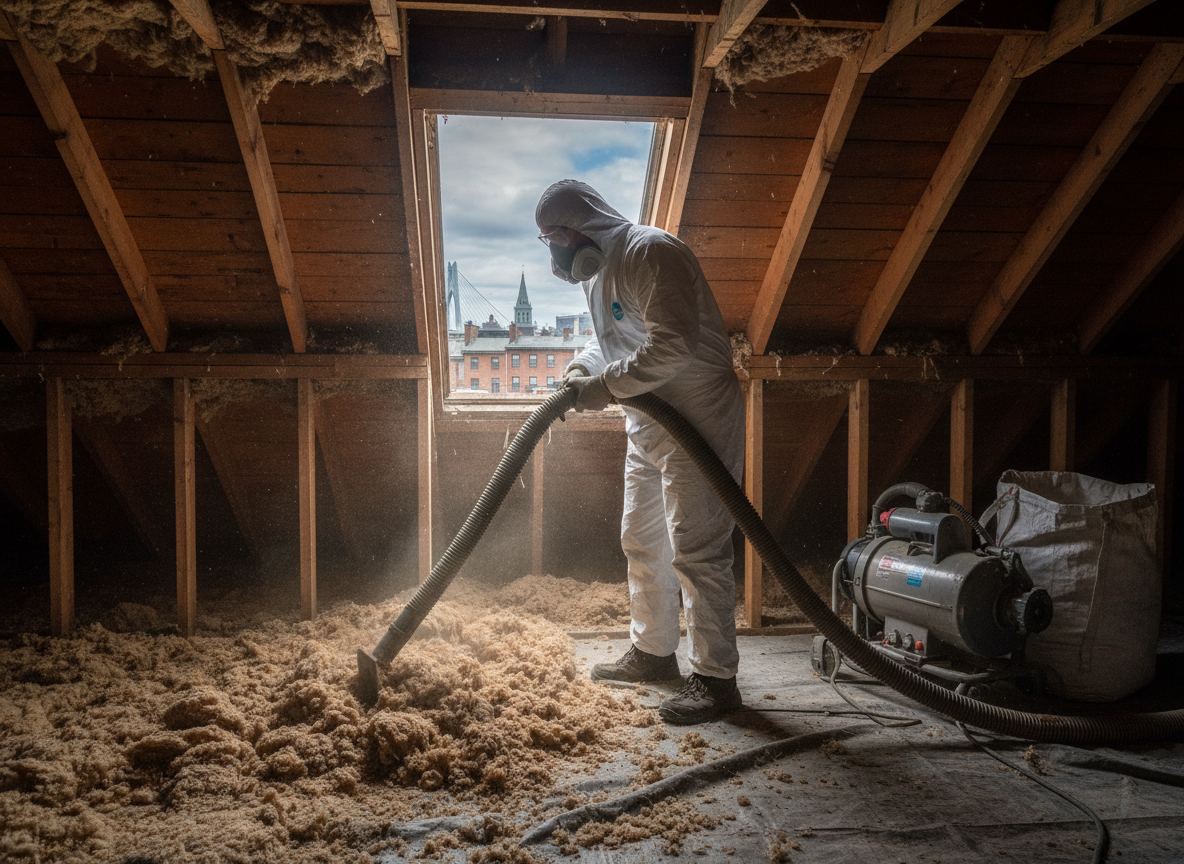
Spray foam insulation removal in Boston requires careful attention to older terraced homes and Victorian stock common along streets near Strait Bargate. These buildings often have timber joists and lath-and-plaster ceilings where foam bonds tightly to surfaces. Removing it without damaging original features demands controlled cutting and vacuum extraction methods that limit dust spread through narrow hallways and shared walls typical in the town centre.
Lincolnshire's damp fenland climate affects how foam cures and adheres over time. Moisture from the surrounding low-lying ground can cause foam to trap condensation against roof timbers in properties around Boston. Technicians must check for hidden water ingress before starting extraction, especially in lofts that have seen years of seasonal temperature swings between cold winters and mild summers.
Local building practices in the Boston area frequently include mixed insulation layers from previous upgrades. Removing spray foam often reveals older mineral wool or polystyrene that must be separated and disposed of correctly. Crews working from the Strait Bargate base coordinate disposal routes that comply with regional waste rules while keeping disruption low for residents on nearby streets.
Edge cases arise in converted barns and farm buildings on the outskirts of Boston where foam was applied directly to brickwork. These jobs need extra protection for livestock areas or stored goods and longer setup times to seal off workspaces. ClearSeal Solutions schedules around weather windows to avoid rain interfering with external access points.
Technician insight
In Boston, the thing that catches most people out with insulation removal service is how the damp fenland soil around older homes near Strait Bargate keeps loft timbers slightly moist year-round, so foam pulls away in sticky sheets instead of clean blocks and requires extra drying time before any new work.
Loft clearance on a terrace near the market
Homeowner noticed musty smells after heavy winter rain. We found spray foam trapping moisture against rafters in a 1920s terrace. Removed the foam in sections, dried the timbers, and cleared all debris without affecting the shared chimney stack.
How it works
- 1
Site Assessment
Technician inspects the property in Boston to identify foam type, depth, and any hidden damage to timbers or plaster.
- 2
Containment Setup
Protective sheeting and negative air machines are installed to contain dust within the work zone.
- 3
Foam Extraction
Controlled cutting and vacuum removal of spray foam while monitoring for structural elements.
- 4
Cleanup and Disposal
All material is bagged and taken away, followed by a final vacuum pass and site walkthrough.
- 5
Final Inspection
Homeowner reviews cleared areas and any notes on exposed surfaces before work sign-off.
Pricing
Upfront quotes based on property size and access conditions; final cost confirmed after inspection.