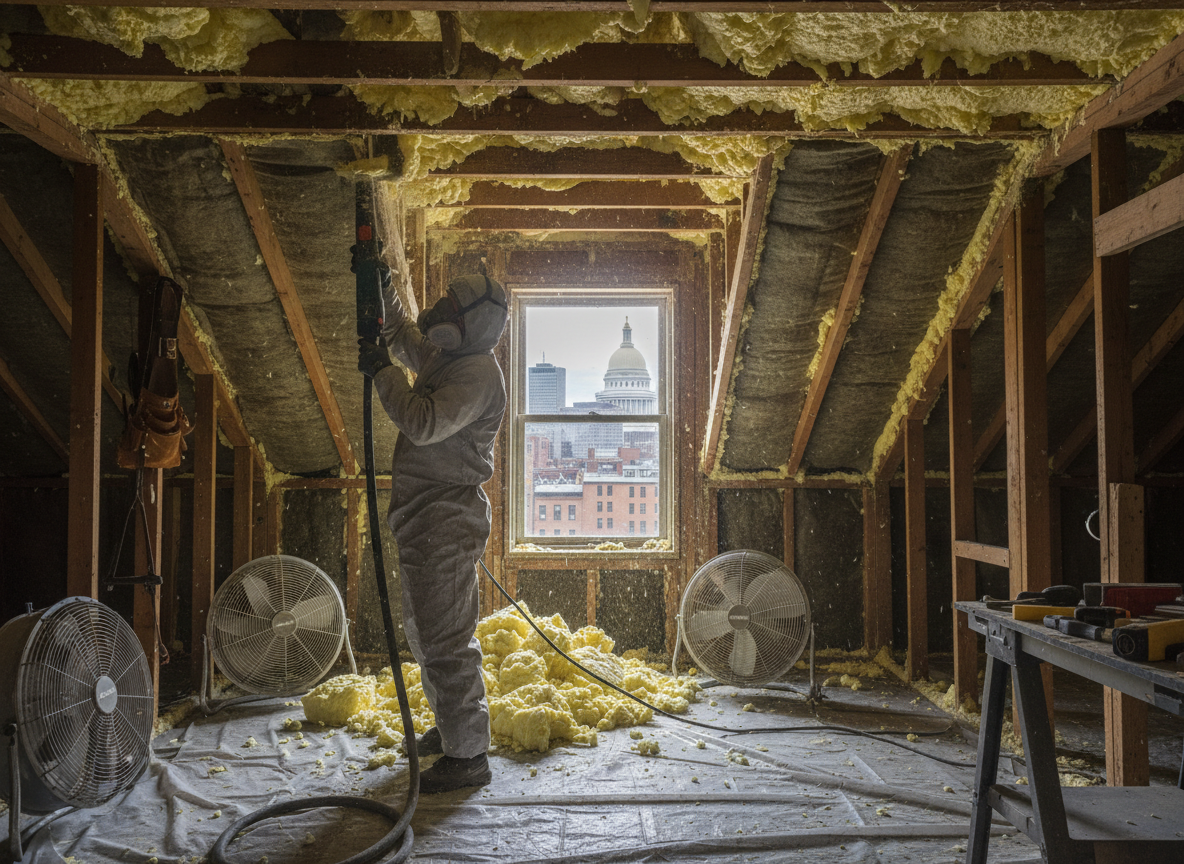
Mortgage lenders often flag closed-cell spray foam in lofts and roof voids because it prevents inspection of timbers and traps moisture against rafters. In Boston's older brick and timber-framed stock around the market place and along the River Witham, this issue shows up during valuations when surveyors cannot access original roof structures. Removal requires careful cutting back to the rafters without damaging felt or battens, followed by full debris extraction to leave the space inspectable. Fenland humidity and seasonal temperature swings accelerate condensation problems once foam is present, so the job must restore ventilation paths that older properties relied on before modern insulation was added.
Edge cases in the Boston area include properties near the docks where salt air has already corroded fixings, making foam adhesion stronger and increasing the risk of substrate damage during stripping. We use negative-pressure containment and HEPA filtration to keep dust out of living spaces, especially important in terraced homes on streets like Wide Bargate where party walls share roof voids. Lenders frequently require photographic evidence of bare timbers and a written confirmation that no foam residue remains before releasing funds, so documentation is built into every job from the first inspection onward.
Regulation notes matter here because some lenders now reference the Property Care Association guidance on spray foam and insist on removal rather than retrospective certification. In Lincolnshire's clay-heavy soils, minor roof movement is common, so we check for hairline cracks in the ceiling before starting and flag any structural concerns to the homeowner and surveyor. The work is done in sections to maintain roof integrity during the process, avoiding the need for temporary weatherproofing on exposed days typical of the east coast climate.
Technician insight
In Boston, the thing that catches most people out with mortgage lender spray foam removal is how the damp fenland air has already started breaking down the foam adhesion on the north-facing slopes of older roofs, so what looks like a quick peel often turns into a slower, section-by-section job once you get past the first layer.
Survey Block on a Terraced Property Near the Market Place
A 1930s terrace off Strait Bargate failed its mortgage valuation because closed-cell foam covered the rafters. We found the foam had bridged a small roof leak that had gone unnoticed. After stripping back to bare timber and clearing all residue, the surveyor signed off and the sale proceeded.
How it works
- 1
Initial Survey
We inspect the loft or roof void on site in Boston, noting foam type, depth, and any signs of moisture or timber damage before quoting.
- 2
Containment Setup
Dust barriers and extraction equipment are installed to protect the rest of the property during removal.
- 3
Foam Stripping
Foam is cut back to the rafters in controlled sections, with all material removed and bagged for off-site disposal.
- 4
Final Clearance
The void is cleaned, ventilated paths restored, and a full set of dated photographs taken for the mortgage surveyor.
Pricing
Upfront quotes after inspection; cost varies with access, foam depth, and property size.