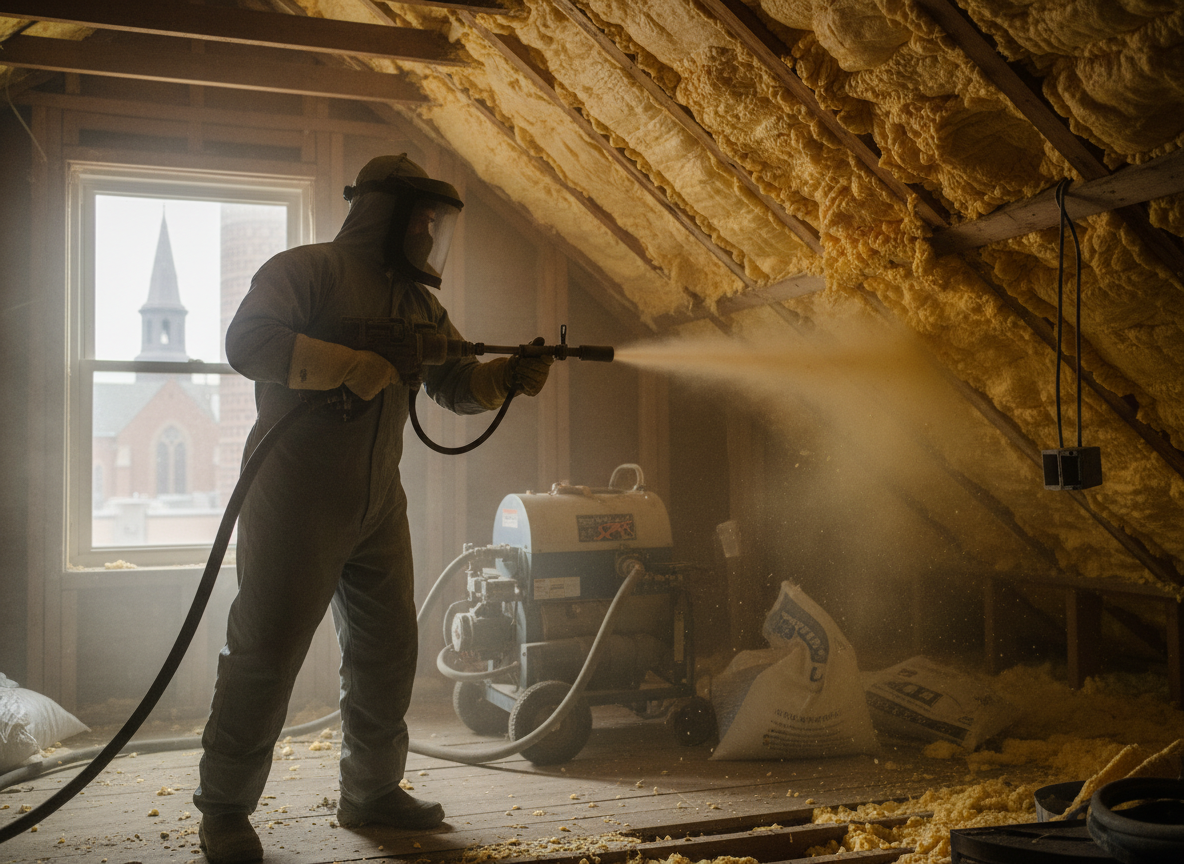
Sand blasting spray foam insulation removal requires controlled abrasive media to strip polyurethane without gouging joists or plaster in Boston’s older terraced and farm properties around Strait Bargate. Many homes here date to the Victorian and Edwardian eras with lath-and-plaster ceilings and exposed beams that foam adheres to tightly. Wet Lincolnshire winters leave residual moisture that softens foam yet increases dust cling, so crews run negative-air machines and seal rooms floor to ceiling before starting. Edge cases include foam that has wicked into brickwork mortar joints near the River Witham, where over-blasting can erode pointing and invite further damp.
Local substrate conditions change the job daily. Clay-heavy soils around Boston hold water, keeping crawl spaces humid and foam soft in places while hard and brittle elsewhere. Operators adjust blast pressure and media grit on site after test patches, especially when working near electrical cabling or pipe runs common in 1920s-1950s additions. Homeowners often attempt DIY scraping first, leaving torn foam that then requires extra passes to clear fully and raises airborne particle counts during the proper removal.
After blasting, surfaces are vacuumed and wiped with a mild detergent solution to remove fines before any new insulation or lining is considered. In Boston’s tight terraced streets, debris must be bagged immediately and removed via side access rather than through front doors to avoid neighbour complaints. The process also reveals hidden issues such as rot in floor joists or failed pointing that owners can inspect while the structure is open.
ClearSeal Solutions schedules around the tidal River Witham levels and prevailing winds that can carry dust toward the marketplace when work occurs on upper floors. All waste is disposed through licensed channels, and the team photographs each stage for the homeowner’s records.
Technician insight
In Boston the thing that catches most people out with sand blasting spray foam insulation removal is how the damp fenland clay keeps crawl-space foam soft in winter yet leaves it rock-hard against rafters by spring, so you always end up doing two different blast settings on the same job and the dust sticks to everything if you skip the extra wipe-down.
Foam Removal in 1930s Terrace Near Strait Bargate
Homeowner called after DIY scraping left torn foam and dust throughout the first-floor bedrooms. Inspection found foam had bonded into lathe gaps and along a shared chimney breast. Crew set up full containment, used two media grades to clear the material without disturbing the original plaster, then vacuumed and wiped all surfaces. Property was handed back clean the same day with no remaining foam and clear photos of the exposed timbers.
How it works
- 1
Site Assessment and Containment
Technicians inspect foam depth, substrate condition and access routes at the Boston property, then erect sealed poly barriers and negative-air filtration to protect living spaces.
- 2
Abrasive Removal
Low-pressure sand blasting strips the foam layer by layer, with media and pressure adjusted for timber, brick or plaster to avoid surface damage common in older Lincolnshire homes.
- 3
Cleanup and Verification
All residue is HEPA-vacuumed and surfaces wiped; the team checks for remaining foam pockets and documents the cleared area before barriers are removed.
Pricing
Cost depends on foam thickness, access difficulty and property age; quotes are provided after on-site inspection.